I was about fourteen or fifteen years old when I first realized something many children should never have to realize.
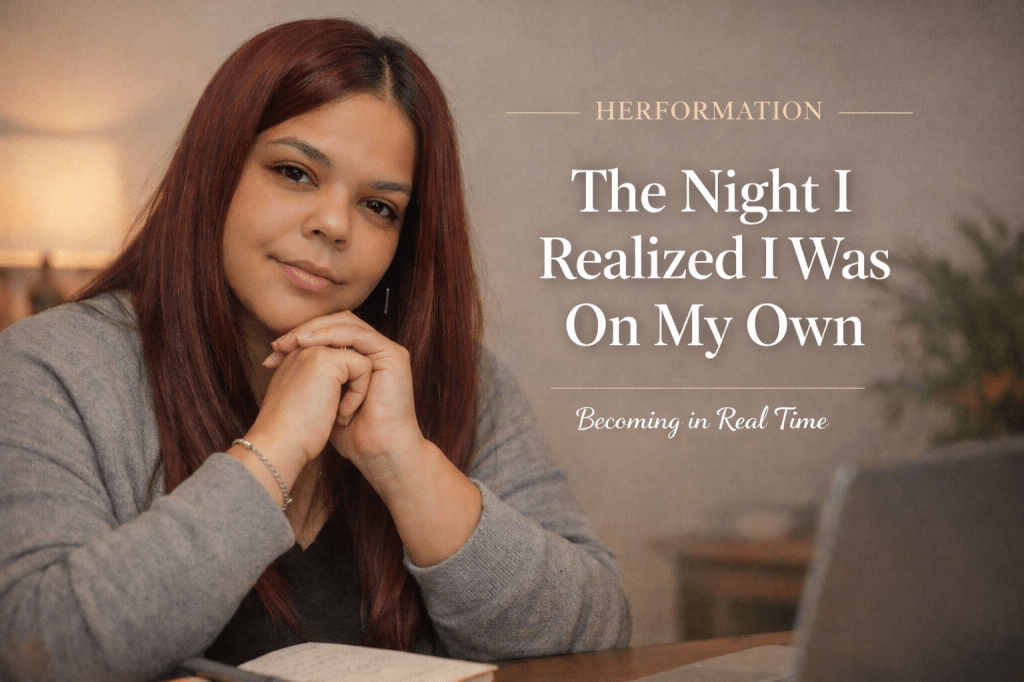
I was on my own.
Not in the sense that no one loved me. My mother loved me in the way she knew how. But addiction has a way of changing the roles inside a family. It blurs the lines between parent and child until sometimes the child becomes the one holding things together.
That night, my mom was drunk and wanted to go to the store.
She was too drunk to drive, so I drove her.
When we got there, I asked what she needed. She told me, and I started to open the door to go inside.
Before I could step out of the car, she panicked.
“Why are you leaving me?” she cried. “Please don’t leave me.”
So I closed the door and sat back down.
A few minutes passed. Then she told me again to go inside and get what she needed.
So I opened the door again.
And again she cried.
Again she told me I didn’t love her enough to stay.
Again she told me I didn’t love her enough to go.
Back and forth.
Over and over.
I remember sitting there in that car for what felt like hours, stuck between two impossible choices.
If I stayed, I was failing her.
If I left, I was failing her.
At one point I remember feeling so frustrated I wanted to scream. We had been sitting there forever, and I didn’t know what the right answer was supposed to be.
But at the same time, I could see how badly she was hurting.
Even at that age, I understood something I didn’t yet have the language for.
What we were living through wasn’t just our story.
It was generational.
Pain passed down quietly from one life to another, until someone eventually decides it stops here.
And somewhere in the middle of that confusion, I had a thought that would stay with me for the rest of my life.
Is this how life is always going to be?
Because in that moment I didn’t know what the right answer was.
I only knew that no one was coming to solve it for me.
The Moment Responsibility Arrived
When people talk about childhood, they often imagine innocence.
But for some of us, responsibility arrives early.
Not because we ask for it.
Because circumstances demand it.
Looking back now, I realize that moment wasn’t just about a car ride to the store.
It was the moment I began learning how to navigate life without a guide.
How to read situations.
How to adapt.
How to stay calm even when the environment around me wasn’t.
Many children in the environment I grew up in were navigating similar realities. Addiction, instability, lack of resources—these things were not unusual where I lived.
So I didn’t necessarily feel different at the time.
But something shifted inside me that night.
I stopped expecting someone else to show me how life worked.
And I started figuring it out on my own.
The Hidden Cost of Growing Up Too Soon
Children who grow up in unstable environments often develop strengths very early.
Resilience.
Independence.
Problem-solving.
But those strengths come with a hidden cost.
You learn how to survive situations that children should never have to manage.
You learn how to carry responsibilities that were never meant for you.
And sometimes, you begin to wonder if you’re responsible for things that were never yours to carry.
As a child, I often wondered why I wasn’t enough.
Why my father wasn’t around.
Why my mother—who could be such a great mother to other people—sometimes struggled to be that same mother to me.
I didn’t understand addiction.
I didn’t understand trauma.
I only understood the feeling of trying to be strong enough for both of us.
The Leader That Experience Created
Years later, I began noticing something about the way I lead.
I care deeply about helping people succeed.
Not just in their current job.
In their lives.
I believe in transparency.
I believe in giving people access to knowledge and opportunities they may not know exist.
And I believe that when a leader leaves a team, the people they leave behind should be stronger, not dependent.
For a long time I wondered why I felt so strongly about that.
Then I realized something.
It comes from that same instinct that was born in that car.
The instinct to figure things out.
The instinct to help others avoid confusion and unnecessary struggle.
Because I know what it feels like to grow up without a roadmap.
The Mother I Choose to Be
Becoming a mother changed the way I understand that experience.
My daughter will grow up in a different environment.
Not because life will be perfect.
But because she will always know something I didn’t always know.
She will always know she is enough.
She will never have to question whether she deserves my love.
And she will never have to carry responsibilities that belong to me.
Because children deserve the freedom to grow before they have to lead.
Closing Thought
Sometimes the moments that shape us the most are the ones that felt the most confusing at the time.
That night in the car didn’t give me answers.
It gave me awareness.
Awareness that the pain my mother carried didn’t begin with her.
And the frustration I felt sitting there didn’t belong entirely to me either.
What we were both living through was something much larger than that moment.
It was generational.
Pain passed down quietly from one life to another, until someone decides it stops with them.
As a child, I didn’t know how to stop it.
But as a woman—and now as a mother—I do.
Because when I look at my daughter, I don’t just see the future I want for her.
I see the responsibility I carry to break cycles that existed long before she was born.
She will never have to sit in a moment wondering if she is enough.
She will never have to carry burdens that belong to the adults around her.
And she will always know that the love she receives from me is not conditional, not fragile, and not something she has to earn.
That night in the car may have been the moment I realized I was on my own.
But it was also the beginning of something else.
The moment I unknowingly began the long journey of making sure my daughter never has to feel that way.
And in many ways, that moment was one of the earliest steps in my own Herformation.
 Woman Enlightened
Leave a comment